
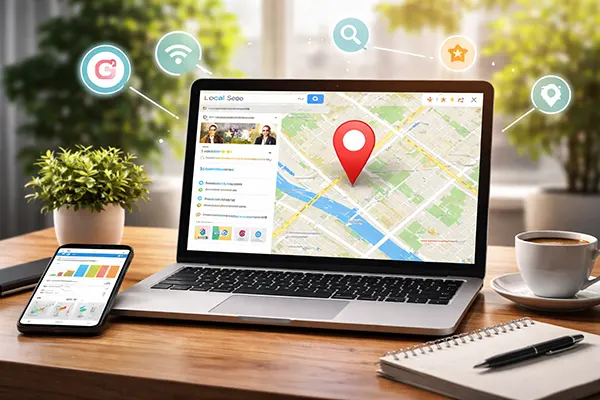
Local SEO 2026: How to Increase Conversions from Google Business Profile with Categories, Services, UTM and FAQ
Local search in 2026 is no longer about simply appearing on the map. Google Business Profile has evolved into a conversion-driven asset where categories, structured services, tracking parameters and well-built FAQs directly influence enquiries, calls and bookings. With AI-generated local packs, voice search integration and behavioural signals shaping visibility, businesses must treat their profile as a performance channel rather than a directory listing. In this guide, I will break down practical methods that are working right now to increase measurable conversions from Google Business Profile.
Strategic Category Selection: The Foundation of Local Visibility
Primary and secondary categories remain one of the strongest ranking factors in local search. In 2026, Google continues to rely heavily on the primary category to determine relevance for high-intent queries. Choosing a broad category such as “Consultant” instead of a precise one like “Immigration Consultant” or “Technical SEO Consultant” can dilute visibility and reduce qualified impressions. The primary category should match the main revenue service, not the widest possible description.
Secondary categories now play a more dynamic role in visibility for AI-driven search results. Google’s local algorithms cross-reference categories with on-profile services, website content and user behaviour. Adding irrelevant secondary categories can suppress visibility because behavioural data will not support those associations. It is better to select fewer, highly aligned secondary categories than to add every available option.
Regular category audits are essential. Google frequently adds new category options, especially in fast-growing sectors such as renewable energy, AI consulting, digital marketing and private healthcare. A quarterly review ensures you are aligned with the most specific and up-to-date classifications available in your industry.
How Categories Influence Conversion Behaviour
Categories affect more than rankings; they shape user expectations before a visitor even opens the profile. When the category precisely reflects the service intent, users arriving from search are already pre-qualified. This reduces bounce behaviour and increases calls and direction requests.
Google’s AI summaries in 2026 often pull contextual information based on primary category signals. If your category matches a high-intent search term, your profile is more likely to appear in AI-generated overviews and map packs with transactional queries such as “near me”, “same day”, or “emergency”.
Testing category adjustments can reveal measurable differences in conversion rate. By tracking enquiries before and after category refinement, businesses often observe not only increased visibility but improved lead quality, resulting in higher close rates.
Service Optimisation: Turning Listings into Revenue Drivers
The Services section is frequently underutilised, yet in 2026 it feeds directly into Google’s understanding of business capabilities. Each service should be written clearly, using natural language aligned with how customers search. Avoid keyword stuffing and instead describe outcomes, scope and unique aspects of the service.
Adding detailed service descriptions increases the likelihood of appearing for long-tail queries. For example, instead of listing “Roof Repair”, a description such as “Emergency slate roof repair for Victorian properties” captures more specific intent and attracts better-qualified traffic.
Service entries also influence conversion through clarity. When users see transparent descriptions, they feel more confident contacting the business. This aligns with Google’s increasing emphasis on trust signals, especially for industries that fall under financial, legal or health-related categories.
Using UTM Tracking to Measure Real Conversions
In 2026, relying solely on GBP Insights is insufficient for accurate performance analysis. Adding UTM parameters to the website link within Google Business Profile allows precise tracking inside Google Analytics 4. This makes it possible to distinguish traffic from the profile versus organic website results.
A structured UTM format typically includes source=google, medium=organic and campaign=gbp. Businesses managing multiple locations should also include a location identifier in the campaign parameter. This enables granular performance comparisons between branches.
With accurate tracking in place, you can evaluate not only clicks but meaningful conversions such as form submissions, booked appointments and purchases. This data supports strategic decisions, including category refinement, service adjustments and profile content optimisation.
FAQ Optimisation: Building Authority and Increasing Engagement
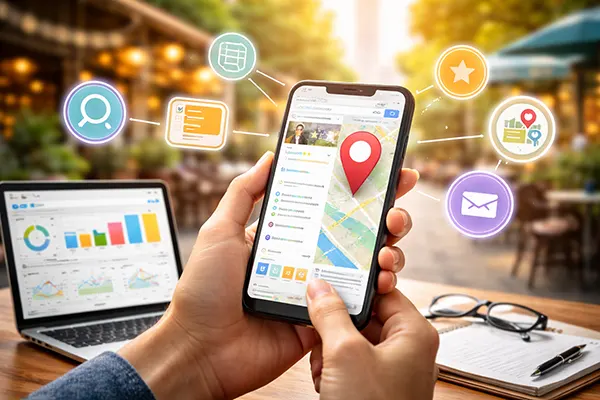
The Questions and Answers section is one of the most overlooked conversion levers within Google Business Profile. In 2026, Google increasingly surfaces FAQs directly in AI-generated answers and voice search results. Businesses that proactively add and answer their own questions gain control over messaging and reduce misinformation.
Effective FAQs should address pricing structure, timelines, guarantees, service areas and typical customer concerns. Answers must be concise but informative, written in a natural tone that reflects real client conversations. This improves trust and reduces hesitation before contact.
Monitoring user-submitted questions is equally important. Fast, authoritative responses demonstrate activity and reliability. Unanswered questions can negatively affect perception, particularly in competitive industries where users compare several profiles before making contact.
Structured FAQ Strategy for Higher Conversion Rates
A structured FAQ approach begins with analysing search queries from Google Search Console and customer enquiries received via phone or email. Recurring questions should be converted into on-profile FAQs. This ensures alignment between search demand and profile content.
Answers should support decision-making rather than provide vague information. For example, instead of stating “Pricing varies”, explain key pricing factors and typical ranges where appropriate. Transparency builds credibility and shortens the path to enquiry.
Finally, FAQs should be reviewed regularly. As services evolve, regulations change or new offerings are introduced, updating answers keeps the profile accurate. In 2026, freshness and consistency across website, profile and external citations contribute to stronger trust signals and improved conversion performance.
Best News
-
 SMM Automation: Chatbots, Messaging Tools ...
Social media management in 2025 is increasingly shaped by automation technologies that support communication speed, service …
-
 Vibe Marketing: Creating Campaigns Driven ...
Modern marketing is no longer defined solely by data-driven decisions. While statistics and analytics remain vital, …
-
 How to create a successful brand?
Brand success is an important indicator. Thanks to it, you can stand out from the competition …
-
 What is copywriting?
Copywriting is now one of the stable sources of additional or permanent income. However, not everyone …
-
 What is marketing?
Now more and more people get information from the Internet. Newspapers and televisions have been replaced …
-
 How to choose a logo?
The logo is an important symbol of any brand. It is designed to make the company …